
The Mar-a-Lago Connection
Fourteen phone numbers. Message pads showing calls during the abuse period. A flight on Epstein’s plane. A 15-year-old recruited from the spa. A sworn affidavit laying out seven grounds for deposition. The documented relationship between Donald Trump and Jeffrey Epstein, told entirely through civil litigation records.
Jeffrey Epstein's computer held a personal phone directory. Inside it, under the entry for Donald Trump, investigators found not one number, not two, but fourteen — emergency lines, car phones, a direct line to his security guard, a line to his houseman. Fourteen ways to reach one man.
What the Message Pads Show
When Palm Beach police raided Epstein's West Palm Beach mansion in 2005, they confiscated the message pads from his office. Those pads recorded who called, when they called, and what they wanted. Attorney Brad Edwards, who represented multiple Epstein victims in civil litigation, reviewed those pads during discovery. What he found became the first item in a sworn affidavit he filed in April 2010.1
Trump, the affidavit states, "called Epstein's West Palm Beach mansion on several occasions during the time period most relevant to my clients' complaints."1
The time period most relevant to the victims' complaints was the period during which Epstein was abusing girls at that address on a near-daily basis.
"Trump called Epstein's West Palm Beach mansion on several occasions during the time period most relevant to my clients' complaints."1
The message pads were physical evidence — seized by law enforcement, logged, and produced in civil discovery. They were not allegations. They were records.
Fourteen Numbers
The phone directory evidence reinforced what the message pads showed. Epstein did not have a single Trump contact in his files. He had fourteen.1
The Edwards Affidavit enumerates them specifically: emergency numbers, car numbers, and direct lines to Trump's security guard and houseman. The level of detail in those entries suggests not passing acquaintance but active, regular access.
Trump himself placed the friendship on the record. In a 2002 New York Magazine profile of Epstein, he said: "I've known Jeff for fifteen years. Terrific guy. He's a lot of fun to be with. It is even said that he likes beautiful women as much as I do, and many of them are on the younger side. No doubt about it — Jeffrey enjoys his social life."2
The article's subtitle listed Trump by name alongside Epstein's other prominent associates — Leslie Wexner, Ghislaine Maxwell, Bill Clinton — as people who made the world wonder who Epstein really was.2
Attorney Spencer Kuvin, who represented approximately 30 Epstein victims, later told reporters: "How would he know that? Why would he make a joke like that?"2

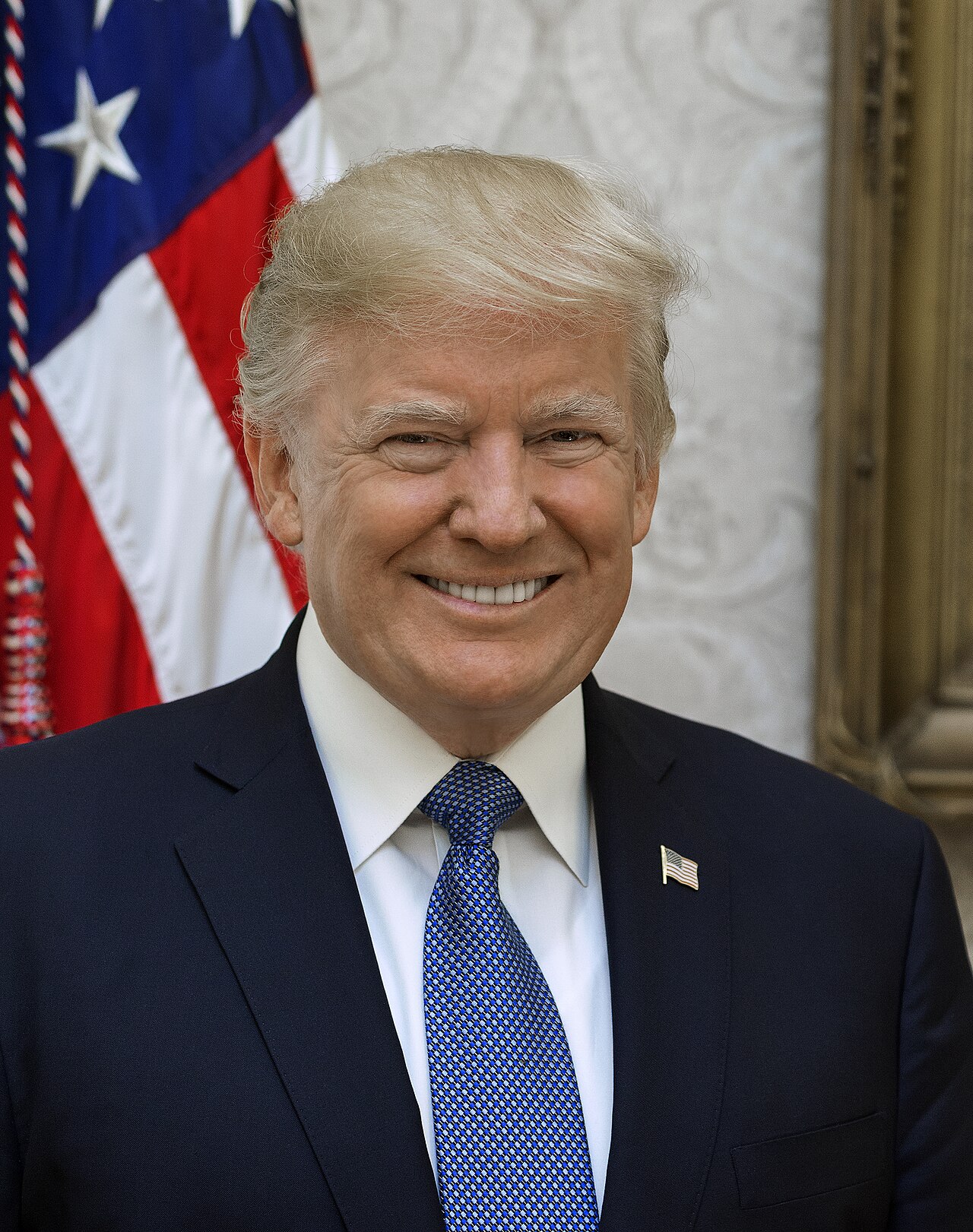
*Donald Trump, 45th and 47th President of the United States.*
The Plane
Jeffrey Epstein's brother, Mark Epstein, gave a sworn deposition on September 21, 2009, in federal court proceedings in the Southern District of Florida. He was questioned by Brad Edwards.3
Edwards asked Mark Epstein whether he had ever met Donald Trump.
"Yes," Mark Epstein replied.
"Was that through your brother?" Edwards asked.
"Yes."
"Where was that?"
"We flew up on my brother's plane from Florida together. Donald was on the plane."
When asked about the nature of the relationship between Trump and his brother, Mark Epstein gave a simple answer: "They were friends."3
"We flew up on my brother's plane from Florida together. Donald was on the plane."3
The flight was on Epstein's smaller aircraft — not the Boeing 727 — in what Mark Epstein estimated as the late 1990s. Passengers on that flight: Jeffrey Epstein, Mark Epstein, Donald Trump, a pilot, and a co-pilot. Mark Epstein said he did not remember whether anyone else was aboard.3
Edwards then asked: "What was the purpose of Donald Trump riding on your brother's airplane?"
Mark Epstein's reply: "You'll have to ask Donald. I think he wanted a ride back to New York."3
The deposition was marked as Exhibit N in the Edwards civil case. It was taken under oath, in a federal proceeding, before multiple attorneys representing multiple sets of victims.
The Recruitment
Mar-a-Lago is a private club in Palm Beach, Florida. Trump bought it in 1985 and converted it into a members-only club in 1995. It operates year-round and employs hundreds of workers, including spa staff.
In 2011, Virginia Giuffre — who had filed civil complaints against Epstein as Jane Doe 102 — gave a sworn telephone interview to Brad Edwards and attorney Jack Scarola. She described in detail how she was recruited.6
"I was working at Donald Trump's spa in Mar-a-Lago," she told them, "and I was prompted by Ghislaine to come to Jeffrey's mansion in Palm Beach that afternoon after work to make some extra money and to learn about massage."6
Maxwell had approached her in the spa. Giuffre was reading a book on anatomy. Maxwell noticed, struck up a conversation, and extended the invitation. Giuffre's father worked at Mar-a-Lago alongside her. He drove her to Epstein's Palm Beach mansion that evening.6
She was 15 years old.6
"I was working at Donald Trump's spa in Mar-a-Lago and I was prompted by Ghislaine to come to Jeffrey's mansion in Palm Beach that afternoon after work."6
The same account appears in contemporaneous court filings. The Palm Beach Daily News reported in March 2011 that Giuffre's lawsuit "says Maxwell recruited [her] at The Mar-A-Lago Club, where [she] was working as a changing room assistant. Maxwell told [her] she could earn big money as a 'traveling masseuse' to a wealthy Palm Beach man."7
The Edwards Affidavit explicitly names this as one of the seven grounds for deposing Trump: "Jane Doe No. 102's complaint alleged that Jane Doe 102 was initially approached at Trump's Maralago by Ghislaine Maxwell and recruited to be Maxwell and Epstein's underage sex slave."1
The Ban
One of the most striking items in the Edwards Affidavit is a single declarative sentence. Edwards writes that he "learned through a source" that Trump had banned Epstein from Mar-a-Lago.1
The reason given: Epstein had sexually assaulted an underage girl at the club.
"I learned through a source that Trump banned Epstein from his Maralago Club in West Palm Beach because Epstein sexually assaulted an underage girl at the club."1
Edwards disclosed this as one of seven reasons a deposition of Trump was warranted — not as an allegation against Trump, but as evidence that Trump possessed firsthand knowledge of Epstein's behavior toward minors.
The Juan Alessi affidavit — filed by Epstein's longtime Palm Beach housekeeper and butler — confirms that Trump visited the Palm Beach mansion, listing him among celebrities he had personally seen there, alongside Senator Mitchell, Prince Andrew, Princess Sarah Ferguson, Alan Dershowitz, Robert Kennedy Jr., and Nobel Prize winners.4
Alessi also noted that unlike other visitors, Trump did not accept massages at the property: "No," he said. "Because he's got his own spa."2
The Witness List
In August 2016, Palm Beach attorney Jack Scarola placed Donald Trump's name on a witness list for an upcoming civil trial. The case was a malicious prosecution claim — Epstein had sued Edwards in an effort to intimidate him into dropping representation of victims. Scarola was countersuing.
By the time the witness list was filed, Trump had won the presidential election. The deposition Scarola had contemplated was no longer practical.
"It is unlikely that he would ever be called," Scarola told reporters.2
Scarola explained why Trump had been on the list at all: Trump and others had "a relationship with Epstein that would have at least exposed them potentially to what was going on inside Epstein's Palm Beach home" during the relevant period.2
"There is no evidence the President was involved in Epstein's schemes."2
That sentence — offered by Scarola himself — is the floor of what the public record supports. It is not the ceiling. The distinction between what is documented and what is proven runs through every page of this case.
The Introduction
In August 2019, FBI agents interviewed a witness in New York as part of the SDNY trafficking investigation. The witness had been introduced to Epstein and Maxwell years earlier, in what she described as a period when she was approximately 20 to 22 years old.5
According to the FBI FD-302 recording that interview:
"EPSTEIN and MAXWELL introduced [the witness] to DONALD TRUMP. TRUMP was polite to [the witness]."5
The document records nothing further about that interaction. It is, on its face, an unremarkable social introduction — a wealthy man meeting a woman brought by his associates at some point in the late 1990s or early 2000s. The record of it is notable not for what it shows but for the pattern it completes.
Seven Points, No Deposition
In April 2010, Brad Edwards filed his sworn affidavit. He laid out seven independent reasons why Donald Trump should be deposed in the civil cases against Epstein:
(a) Message pads showed Trump called Epstein's West Palm Beach mansion during the abuse period.1 (b) The 2002 Vanity Fair quote about women on "the younger side."1 (c) A source told Edwards that Trump banned Epstein from Mar-a-Lago after Epstein sexually assaulted an underage girl there.1 (d) Jane Doe 102 alleged she was recruited at Mar-a-Lago by Maxwell.1 (e) Mark Epstein's sworn testimony that Trump flew on Epstein's plane.3 (f) Trump visited Epstein at the Palm Beach home where Epstein abused minor girls daily.1 (g) Epstein's computer phone directory contained 14 phone numbers for Trump.1
None of those seven points is an allegation of criminal conduct by Trump. Each is a documented evidentiary basis for a deposition — the standard legal mechanism for gathering information from someone with potential relevant knowledge.
The deposition never happened. Epstein's lawyers successfully blocked it. Epstein died in federal custody in August 2019, 48 hours after the SDNY unsealed a new indictment against him. The civil cases settled for undisclosed amounts. The sealed records were never fully opened.
Open Questions
- If Trump banned Epstein from Mar-a-Lago after an assault, did he report that assault to police?
- Were the 14 phone numbers in Epstein's directory ever formally examined by investigators as part of the federal trafficking case?
- What did the message pad entries — the actual physical records — say about the content of the calls?
- Did the SDNY trafficking investigation ever formally assess the civil litigation record on Trump's relationship with Epstein?
- Why was Trump's deposition successfully blocked, and what legal arguments did Epstein's lawyers use?
- Were any of the victims in the civil cases who settled aware of the Mar-a-Lago recruitment at the time of settlement?

Get help building custom platforms, AI-powered tools, and data-driven applications for your business or projects.
This article is based on documents released under the Epstein Files Transparency Act (EFTA). All claims are sourced to specific EFTA documents identified by Bates number. Entity tier classifications reflect evidence strength, not legal determinations.
Research and initial drafting assisted by Claude AI (Anthropic). All articles are reviewed, fact-checked, and edited by Derek Emsbach.
Continue Reading
Related investigations

Reversal of Fortune
EFTA documents reveal that Alan Dershowitz vacationed at Epstein's mansion during an active investigation, mined teenage victims' MySpace profiles to discredit them before prosecutors, helped negotiate blanket immunity for unnamed co-conspirators — and was himself named in authenticated victim testimony as a participant in the abuse.
Let Me Teach You
An FBI Protect Source victim named Donald Trump as her assailant in three recorded interviews. A fourth session was dedicated solely to her account. She declined to proceed, asking “what’s the point?” The FBI then catalogued 15+ additional complainants — and concluded it lacked predicate to investigate.

The Worst Dancer in the World
An FBI 302 documents three sexual encounters between Prince Andrew and a seventeen-year-old victim across three countries. Four redaction variants of the same interview survive in the EFTA corpus. The SDNY requested an interview. The FBI sent an MLAT request. No law enforcement agency in any country has questioned him under oath. The documentary record is complete. The accountability is zero.
Open-source research databases for the Epstein corpus
Community-built SQLite research databases covering concordance metadata, document alterations, image analysis, and handwriting records across 1.4M EFTA documents.
View on GitHub →