
The Hotel du Cap-Eden-Roc at Cap d'Antibes, near Cannes — where Epstein's scheduling documents place overlapping social events with Weinstein in May 2012.
The Other Predator
EFTA documents reveal Harvey Weinstein and Jeffrey Epstein shared guest lists, social fixers, and geography for years — and Virginia Giuffre's authenticated journals place Weinstein inside the trafficking operation. No law enforcement agency ever mapped the overlap.
On May 20, 2012, at the Cannes Film Festival, Jeffrey Epstein's scheduling documents list one afternoon appointment: "Harvey Weinstein and Len Blavatnik lunch on boat."1 It sits between a Vanity Fair party at the Hotel du Cap and a Naomi Campbell fashion show at the Hotel Martinez. In the world these men inhabited, a predator having lunch with a predator was just another line on the calendar.
The scheduling document does not note what was discussed. It does not need to. The documents released under the Epstein Files Transparency Act reveal something more damning than any single conversation: two serial sexual predators, operating parallel networks in the same social ecosystem, connected by the same fixers, attending the same events, protected by the same institutions — and never once investigated as a linked phenomenon by any law enforcement agency.
The Guest Lists
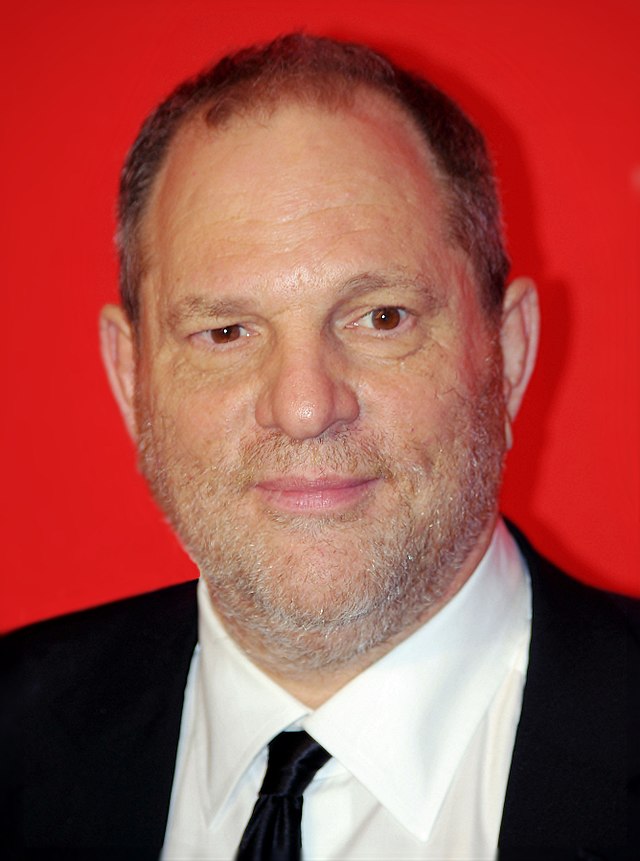
The overlap between Epstein and Harvey Weinstein surfaces most clearly in the guest lists. EFTA document EFTA00758094 — a formal RSVP tracking sheet — records responses to a dinner hosted in Epstein's social circle.2 "Mr. & Mrs. Harvey Weinstein" appear alongside Leon Black, Glenn Dubin, Charlie Rose, Martha Stewart, Diane von Furstenberg, Mortimer Zuckerman, and Jean Pigozzi.2
On the same document, under "Guests who have Replied NO," appears Ghislaine Maxwell.2
This was not an isolated appearance. Separate documents place Weinstein at a social gathering where attendees included "Nicolas Berggruen, Nat Rothschild, Frederic Fekkai, LA Reid, Russell Simmons, Martha Stewart, Jean Pigozzi." The note adds: "Harvey Weinstein and family."3
In 2003, both men bid to acquire New York Magazine. Deutsche Bank compliance documents — multiple copies preserved across the EFTA corpus — record the bidding war: "Epstein bid to acquire New York magazine. Other bidders were advertising executive Donny Deutsch, investor Nelson Peltz, media mogul and publisher Mortimer Zuckerman... and film producer Harvey Weinstein."4 They were outbid by Bruce Wasserstein.
Two powerful men, repeatedly documented in the same rooms, the same events, the same ambitions. The documents don't prove coordination. They prove proximity — the kind of proximity that law enforcement is supposed to investigate when one of the men is a known sex offender.

The Social Fixer
The connective tissue between the two networks had a name: Peggy Siegal.
Siegal — a prominent New York publicist and party planner — maintained simultaneous relationships with both Epstein and Weinstein. The EFTA corpus captures her role in real time.
In one email, Siegal reports to Epstein from Cannes: "Was on Harvey Weinstein's yacht this morning. He made me read all the rave reviews on 'Blue Valentine' and showed me 10 mins of new film about Marilyn Monroe."5 She is reporting on Weinstein's activities to Epstein — not as gossip, but as intelligence from a shared social world.
In a separate email chain, Siegal writes directly to Harvey Weinstein about George Lucas, then the exchange is forwarded into Epstein's email orbit.6 Siegal tells Epstein she is "at Tribeca Grill waiting to hear Harvey Weinstein speak... what devotion to my work."7
The emails show Siegal functioning as a bridge — attending Weinstein's film events and reporting back to Epstein, while simultaneously arranging Epstein's social calendar. She moved between two predatory ecosystems, lubricating access for both.
"Was on Harvey Weinstein's yacht this morning. He made me read all the rave reviews on 'Blue Valentine'..." — Peggy Siegal, email to Jeffrey Epstein5
The Journals
The social overlap documented in guest lists and emails takes on a different character when placed alongside Virginia Giuffre's handwritten victim journals.
Giuffre's journals — later forensically authenticated through gel pen analysis and contemporaneous dating — name the men she was directed by Epstein and Ghislaine Maxwell to have sexual encounters with during her period of exploitation between 2000 and 2002.8 Harvey Weinstein is among the names.
The journals constitute the strongest category of direct evidence in the EFTA corpus. They are contemporaneous. They are handwritten. They are authenticated. And they name a man who would, eighteen years later, be independently convicted of rape.
Weinstein also appears in Epstein's contact directory — the so-called "black book" — with multiple phone numbers listed.8 And a separate handwritten contact list recovered from Epstein's files includes first-name entries that researchers have identified as referencing dozens of figures in Epstein's network.9
Parallel Machines
The structural parallels between Epstein's operation and Weinstein's are not metaphorical. They are mechanical.
Both men weaponized non-disclosure agreements. Epstein's staff were bound by employment contracts with "golden handcuffs" provisions — loyalty clauses that made cooperation with law enforcement grounds for termination and financial forfeiture.10 Weinstein deployed NDAs so aggressively that his victims' silence was purchased before they could speak to anyone, including prosecutors.
Both men relied on institutional enablers. Epstein had Deutsche Bank processing $150 million through 76 accounts while flagging suspicious transactions internally but never reporting them.11 Weinstein had the Miramax and Weinstein Company boards, talent agencies, and media organizations that looked away for decades.
Both men used social prestige as camouflage. Epstein cultivated scientists, politicians, and financiers. Weinstein cultivated Academy Award nominees, media executives, and political donors. The social armor served the same purpose: making accusations unthinkable.
And both men operated in the same geography — the same Manhattan restaurants, the same Cannes parties, the same Hamptons weekends — connected by the same social fixers like Peggy Siegal.
What Was Never Asked
Harvey Weinstein was convicted of rape in New York in February 2020 and sentenced to twenty-three years.12 That conviction was overturned on procedural grounds by the New York Court of Appeals in April 2024.13 He was separately convicted of rape in Los Angeles in December 2022 and sentenced to sixteen years.14
In the Epstein case, Weinstein has never been charged. He is protected by the 2007 Non-Prosecution Agreement's blanket immunity provision, which extended legal protection to unnamed co-conspirators.
The question is not whether Weinstein and Epstein knew each other. The documents make that undeniable. The question is why, when Giuffre's journals named Weinstein among men she was directed to have sexual encounters with, and when both men's networks shared social connectors, guest lists, geography, and operational mechanics — no investigator ever asked whether the two machines were connected.
In May 2019, two months before Epstein's arrest, an iMessage preserved in the EFTA corpus noted: "Harvey Weinstein, like Donald, can't find anyone to be his lawyer."15 By then, both predators' legal problems were public knowledge. What remained unknown — what the documents now make visible — is how thoroughly their worlds overlapped while both were still operating freely.

Get help building custom platforms, AI-powered tools, and data-driven applications for your business or projects.
This article is based on documents released under the Epstein Files Transparency Act (EFTA). All claims are sourced to specific EFTA documents identified by Bates number. Entity tier classifications reflect evidence strength, not legal determinations.
Research and initial drafting assisted by Claude AI (Anthropic). All articles are reviewed, fact-checked, and edited by Derek Emsbach.
Continue Reading
Related investigations

The System
Five interlocking components — financial incentives, governance control, witness suppression, beneficiary alignment, and prosecutorial inaction — produced one outcome: the evidence is in the public record, the accountability is not.
The Case That Wasn’t
The prosecution memo documented 38 victims and multiple perpetrators. The Leon Black investigation accumulated three years of evidence. In both cases, the institutional answer was the same: decline.

The Trustee With No Exit
Jes Staley signed the Epstein trust three times, retained Epstein as a banking client after his conviction, and was documented by prosecutors as having raped a victim during a directed massage. No resignation from the trust has been found. No charges have been filed.
Curious what Epstein and his network talked about?
A community-built email archive spanning years of private correspondence within the Epstein network.
Explore the Archive →