
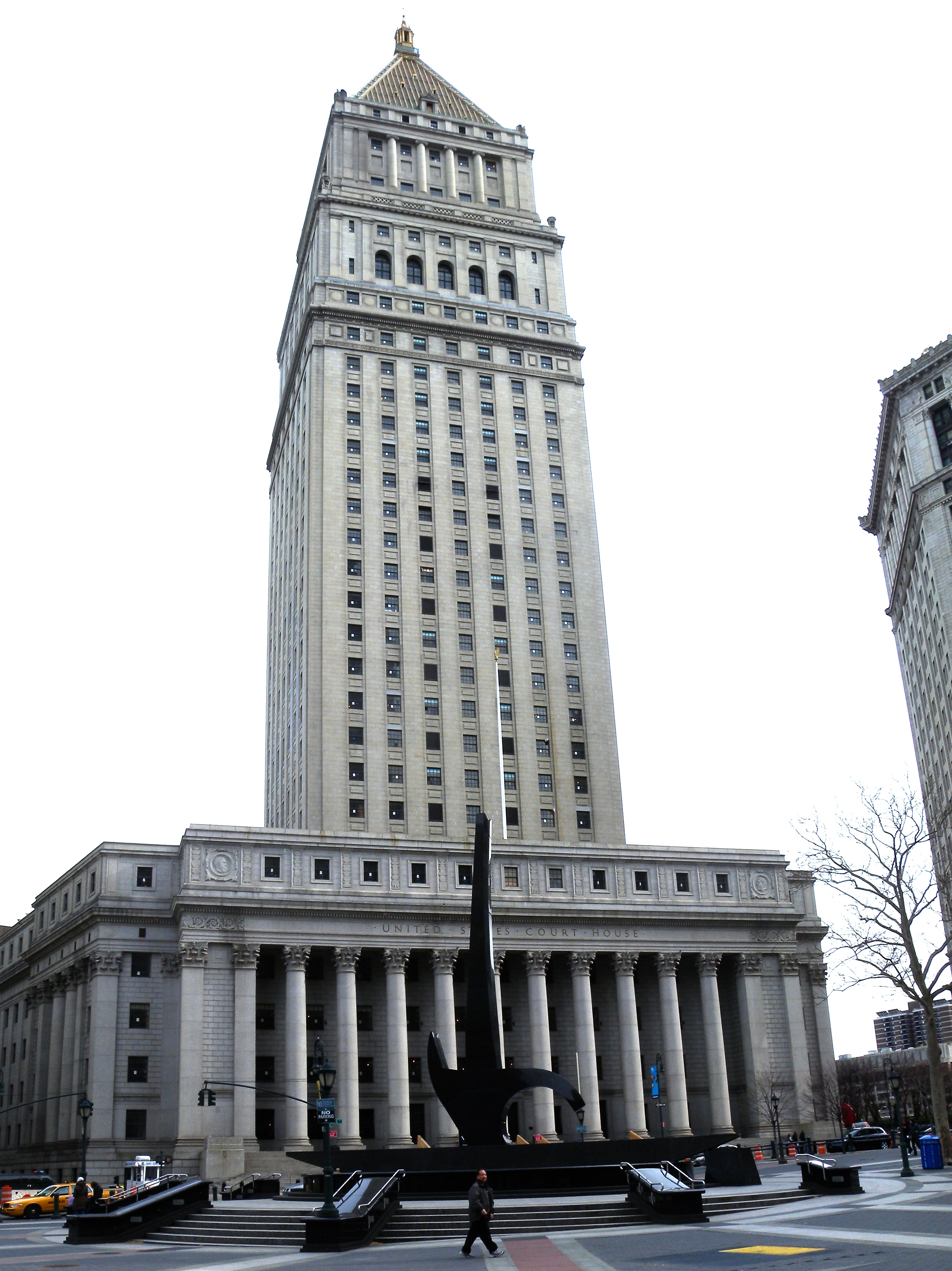
The Thurgood Marshall U.S. Courthouse on Foley Square, Manhattan — where SDNY prosecutors documented Indyke's instruction to an employee: "do not talk to the police"
The Man Who Held Every Key
Darren Indyke was Epstein’s attorney, trustee, $5M beneficiary, debt cancellation recipient, amendment gatekeeper, and the man who told employees not to talk to police. Seven roles. One person. $8.25 million minimum.
Darren Indyke was Jeffrey Epstein's personal attorney. He was also one of three trustees of the Epstein 2014 Trust. He was also a recipient of a $5 million cash bequest. He was also the beneficiary of complete debt cancellation — for himself, his wife, and his business entity. He was also the indirect beneficiary of a $3 million real estate provision directed to his spouse. He was also the nominee holder of Epstein's property interests in at least one LLC.
And after the final amendment to the trust, he was also the sole gatekeeper who controlled whether the trust could be modified at all.
Seven roles. One person. A minimum of $8.25 million in documented financial benefits — and an unknown amount more in forgiven debts and cancelled obligations. No other individual in the Epstein estate documentation holds this many overlapping positions. The arrangement made Darren Indyke the single most conflicted actor in the entire system.1
The Accumulation
The conflicts did not appear all at once. They escalated with each version of the trust, growing more expansive and more entangled from November 2014 through September 2015.
The original trust (November 2014) established the foundation: Indyke was named as lead trustee at $250,000 per year, plus a $5 million cash bequest, plus forgiveness of personal loans from Epstein.12
The Amendment and Restatement (May 2015) expanded the financial entanglement. A new Section 2.3.A.24 cancelled all of Indyke's financial obligations — not just loans but every debt of any kind — owed to Epstein, to Southern Financial LLC (a USVI entity), or to "any entity in which Grantor holds directly or indirectly a beneficial interest." The cancellation extended to his wife, Michelle Fern Saipher, and his Florida company, Harlequin Dane, LLC.3
Only one other person received this treatment: richard d kahn, Epstein's accountant, whose debts were similarly cancelled along with those of his spouse and business entity.8
The First Amendment (~September 2015) added two final provisions. The first directed $3 million to Indyke's wife for a specific real estate transaction — the purchase of 2 Kean Court in Livingston, New Jersey, through two intermediary LLCs:4
"I give to MICHELLE FERN SAIPHER, if she is then married to DARREN KEITH INDYKE, Three Million Dollars ($3,000,000), which funds shall be distributed and used for the sole purposes of repaying FT Real Estate, Inc."4
The conditionality is revealing: the $3 million flows only if Saipher remains married to Indyke at the time of Epstein's death. A provision designed to bind Indyke's personal life to his professional entanglement.
The second change was more consequential.
The Gatekeeper
In the original trust, amendments required the agreement of all three trustees:
"I reserve the right, at any time and from time to time, to amend this Agreement, in whole or in part, by a written instrument executed and acknowledged by me and my Trustees."5
Indyke, Jes Staley, and David Mitchell all had to sign. This was a structural check — no single trustee could control modifications to the trust.
The First Amendment eliminated that check:
"I reserve the right, at any time and from time to time, to amend this trust agreement in whole or in part, by a written instrument executed and acknowledged by me and delivered to no less than one Trustee of this Trust."6
One trustee. That was Indyke — the attorney with daily access to Epstein, the man who drafted the trust instruments, the person who controlled the estate's legal affairs. Epstein could now modify the trust at will through Indyke alone, without Staley's or Mitchell's knowledge or consent.

The Financial Web
The total documented minimum:
| Category | Amount | Trust Version |
|---|---|---|
| Cash bequest | $5,000,000 | All three |
| Trustee compensation ($250K/year) | ~$1,250,000 (est. 5 years) | All three |
| Spouse real estate provision | $3,000,000 | First Amendment |
| Loan forgiveness | Unknown | All three |
| Debt cancellation (self) | Unknown | A&R + First Amendment |
| Debt cancellation (spouse) | Unknown | A&R + First Amendment |
| Debt cancellation (entity) | Unknown | A&R + First Amendment |
| Known minimum | $8,250,000+ |
The "unknown" entries are significant. The blanket debt cancellation covers obligations to Epstein's entire corporate network — every entity in which Epstein held a direct or indirect beneficial interest. The scope suggests the financial entanglement was deep enough to warrant a provision that would sweep clean every possible claim.
The escalation pattern — each trust version adding more benefits while concentrating more control — is the opposite of what arm's-length trust administration would produce. An independent attorney advising a client would be expected to reduce, not increase, their financial entanglement with the client's estate over time.
The Parallel
Indyke did not hold these positions alone. richard d kahn — Epstein's accountant — received a nearly identical package: a $2 million bequest in the original trust (later raised to match other provisions), loan forgiveness, and the same blanket debt cancellation extending to his wife Lisa Kahn and his entity Coatue Enterprises, LLC.8
Together, Indyke and Kahn formed the financial infrastructure of the Epstein estate. They were the only two individuals who received the complete package: cash bequest, loan forgiveness, and blanket debt cancellation extending to spouses and business entities. After Epstein's death, they became co-executors.
The prosecution memo reveals what Kahn did with this position. In November 2018, days after the Miami Herald published its "Perversion of Justice" investigation, Epstein directed Kahn to wire $250,000 to an assistant who had worked for him since the early 2000s.9
The assistant told prosecutors the payment was unrelated to the articles. The government's assessment of that claim is redacted.9
A quarter-million dollars, flowing from Epstein through his accountant to an employee, at the precise moment when media scrutiny threatened to unravel the operation. Kahn was the wire man — the intermediary who executed payments when silence was most urgently needed.
The Instruction
The prosecution memo documents one specific instance of Indyke's operational role — not as attorney or trustee, but as enforcer:
"[Indyke] told [the assistant] that if she ever needed help she should not talk to the police and that she should call him instead."10
The person saying this was simultaneously the attorney who represented the employer, the trustee who controlled the bequests, and a man with $8.25 million riding on the outcome. When Indyke told an employee not to talk to police, the financial weight of the entire trust stood behind the instruction.
The assistant in question faced a choice designed to have only one answer. Talk to police, risk "misconduct" forfeiture of her bequest, and face an attorney-trustee-beneficiary who controlled the determination. Or stay silent, keep working, and hope the employment cliff would deliver her inheritance a year after Epstein's death.
The Trustee's Powers
The trust granted its trustees extraordinary authority. Sections 6.3 and 6.4 of the Amendment and Restatement enumerate 18 investment powers and 12 administrative powers.7 Among them:
- Take possession of all trust assets
- Invest without statutory limitations
- Create or invest in business entities
- Delegate authority to agents
- Transfer the trust's jurisdiction to any country without court approval
Any two of the three trustees could act by majority rule.7 With Indyke controlling the amendment power and Staley's involvement potentially nominal, the practical administration of a $340-400 million estate rested largely with Indyke and, by extension, Kahn.
The trust also allowed the trustees to hold property through nominees — and the First Amendment confirms that Indyke served as Epstein's nominee for at least one LLC (Lyn & Jojo, LLC), holding property interests in his own name on behalf of the trust.11
What Cannot Be Independent
Under any standard of professional responsibility, an attorney who is simultaneously the largest individual beneficiary of his client's estate, the administrator of that estate, and the gatekeeper controlling its modification, cannot be said to be serving his client's interests free of personal bias.
The trust's self-dealing provision — a standard clause allowing trustee-beneficiaries to participate in decisions affecting their own bequests — does not resolve this problem. It addresses the narrow question of whether a trustee can vote on their own distribution. It does not address the systemic conflict of an attorney who drafts the instrument that enriches him, controls the amendment power that could modify his benefits, administers the witness control provisions that protect the estate from scrutiny, and instructs employees not to speak with police.
The prosecution memo's charging analysis — pages 74 through 85 — is entirely redacted. Whether Indyke's conflicts were ever analyzed, whether his instruction to the assistant was assessed as potential obstruction, whether the $250,000 payment Kahn executed was evaluated as witness tampering — all hidden behind deliberative process privilege.12
The trust documents are in the public record. They show the accumulation, the escalation, and the convergence of every key into one person's hand. What the government decided to do about it is the part we cannot see.
This story is sourced from documents released under the Epstein Files Transparency Act. For the complete analytical report, open questions, and full source document register, see the [source case file](/case-files/indyke-conflicts-of-interest).

Get help building custom platforms, AI-powered tools, and data-driven applications for your business or projects.
This article is based on documents released under the Epstein Files Transparency Act (EFTA). All claims are sourced to specific EFTA documents identified by Bates number. Entity tier classifications reflect evidence strength, not legal determinations.
Research and initial drafting assisted by Claude AI (Anthropic). All articles are reviewed, fact-checked, and edited by Derek Emsbach.
Continue Reading
Related investigations

The System
Five interlocking components — financial incentives, governance control, witness suppression, beneficiary alignment, and prosecutorial inaction — produced one outcome: the evidence is in the public record, the accountability is not.

Normal for This Client
Deutsche Bank opened 76 accounts for a convicted sex offender, processed millions in payments to "ostensible foreign models" and co-conspirators, watched his attorney structure cash withdrawals — and when compliance flagged a wire to a Russian woman, the analyst wrote: "Once this type of activity is normal for this client it is not deemed suspicious."

The Trustee With No Exit
Jes Staley signed the Epstein trust three times, retained Epstein as a banking client after his conviction, and was documented by prosecutors as having raped a victim during a directed massage. No resignation from the trust has been found. No charges have been filed.
Open-source research databases for the Epstein corpus
Community-built SQLite research databases covering concordance metadata, document alterations, image analysis, and handwriting records across 1.4M EFTA documents.
View on GitHub →